Showing posts with label designer. Show all posts

Saturday, October 9, 2010

Rolls-Royce 101EX Latest Model

Another creation of experimental Rolls-Royce, have been designed and built to meet the requirements of 101EX stylistic and engineering of the most dynamic Rolls-Royce. To this end, the Group has established an exciting interpretation of T 21 Coupe classic grand tour.

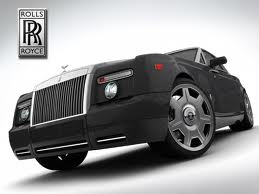


Once again, stereo, aluminum is a modified version of those used in the Phantom, along with the familiar 6.75-liter, V12, 48 valve gasoline direct injection engine. Shorter, with a roofline lowered, and the 101EX is, Petite sleek, muscular system, with tighter, more public sports lines emphasis on the ability to be high performance, while under the hood on the engine bay black and ended specially cam black covers the development of appropriate distinct tone.


In contrast to production Rolls-Royce cars, which rely mostly on alloy body panels, and a 101EX sleek lines of the special carbon fiber composite. Once again, use a pair of rear doors stops, and high waist of the car, to confirm the nature of the cocoon-like interior.

Provision, intimate, luxury and space for four, 'Tops Starlight 101EX features a special, which employs optical fiber to create the illusion of the night sky filled with stars. The characteristic spirit of ecstasy is also the focus of attention. In place of the traditional mascot of nickel plated steel, and a team T fashioned from polycarbonate material.

With the completion of ice and illuminated by fiber optics, 101EX Spirit of Ecstasy is an appropriate figurehead for the amazing car is truly extraordinary. In the finest tradition of Rolls Royce and a pilot, 101EX is the last taste of the excitement as possible.

Thursday, October 7, 2010

Formula One Car

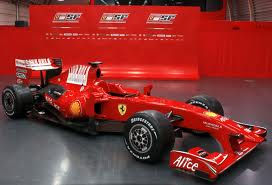
The modern Formula One car almost as much in common with the fighter, as is the case with the regular cars on the roads. Has become the movement of air the key to success in this sport and the teams spend tens of millions of dollars on research and development in the field each year.


Designer has two concerns the primary air: Create the bottom, to help pay for the vehicle's wheels on the road and improve cornering forces, and reduce the drag that gets caused by turbulence and acts to slow the car down.

Several teams started to experiment with the now familiar wings in the late 1960s. Race car wings operate on the principle exactly the same as airplane wings, and only in the opposite direction. Air flow at different speeds on both sides of the wing (by having to travel different distances on its features) and this creates a difference in pressure, and the base material, known as the Bernoulli principle. As this pressure tries to balance the wing, trying to move in the direction of low pressure. The use of aircraft wings to create lift, racing cars used to create them lower. A Formula One car is capable of developing modern force 3.5 g lateral cornering (three and a half times its own weight) thanks to the downforce aerodynamics. This means that, theoretically, at high speeds, which could lead upside down.


Introduced early experiments with movable wings and stabilizers have led to high and there were some spectacular accidents, and on the list of season 1970 to reduce the size and location of the wings. Evolved over time, those rules are still valid to a large extent today.


By the lower 'ground effects' in the mid-1970s that have been discovered. Found on the Lotus engineers that can make the car completely to serve as a wing of the establishment of the giant wing on the bottom of it, which would help to absorb the road. The final example of this thinking BT46B Brabham, designed by Gordon Murray, who was in fact a cooling fan to extract air from the area Skirted under the vehicle, and create a huge lower body. After the technical challenges of the other teams had to withdraw after one race. He said the rule changes to reduce the benefits of 'ground effects' - the first ban on skirts used to contain a low pressure area, later in the requirement for 'the floor stepped up'.Although wind tunnels full-sized and large computing power used by air districts for most teams, and the fundamental principles of Formula One aerodynamics still apply: to create the greatest possible downforce for the minimal amount of drag. Main wings mounted front and rear equipped with different features depending on the requirements of the lower specific path. Tight, slow circuits like Monaco require very aggressive wing profiles - you'll see that cars run two 'blades' independent 'elements' on the rear wings (two is the maximum allowed). In contrast, high-speed circuits like Monza see car and stripped of the wing as much as possible, to reduce drag and increase speed on long straights.


Each one surface of a Formula One car of modern form and links to comment on the helmet of the driver - and its air consideration. Disrupted air, where 'separates' the flow of the body, and creates turbulence creates drag - which slows the car down. Look at the new car and you will see that almost spent a lot of effort and limit the growth of clouds lower - from the end of the vertical panels installed on the wings to prevent the formation of vortices to the publisher boards mounted low in the back, which helps to re-equalize the pressure in the air faster flowing passed under the car and otherwise would create a pull 'balloon' and the low pressure at the back. However, designers can not make it in their cars, and slippery 'too, a good supply of air flow to be a guarantee of help to dispel a tremendous amount of heat produced by the engine of modern Formula One.